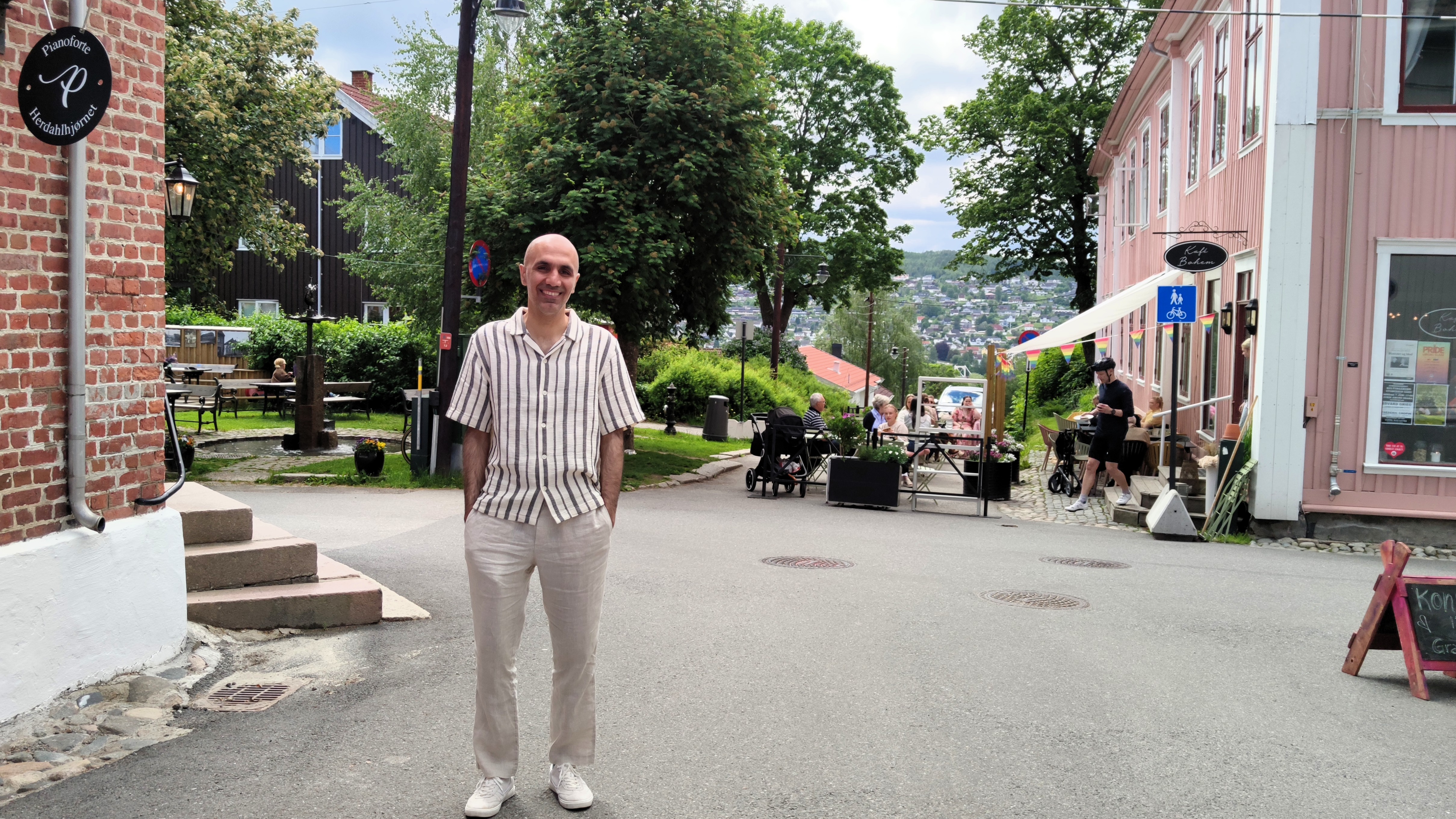
Hi, I’m Hamed Samsami
I’m Hamed Samsami, a Hydrologist and Hydroinformatics Engineer based in Kongsvinger, Norway. I combine hydrology, machine learning, and software engineering to build smarter water systems that help utilities and communities make better decisions.
Over the past 17+ years, my career has evolved from designing and supervising water infrastructure projects to developing AI-powered forecasting systems, cloud-based data pipelines, and digital water platforms. My work sits at the intersection of water science and technology, where process-based hydrology meets machine learning.
I believe the future of water engineering is digital, and I’m excited to help build it.
My Journey
A Passion for Coding
Long before I became an engineer, I was fascinated by computers.
As a teenager, I spent countless evenings teaching myself programming while many of my friends were busy playing games or chatting online. I participated in programming competitions and built websites and small software projects simply because I enjoyed creating things.
Even while studying civil engineering, I continued writing code whenever I had free time. Friends, classmates, and family quickly learned that I was the person to call whenever there was a computer problem or a new website to build.
Looking back, programming wasn’t just a hobby—it became the foundation for everything I do today.
Building Better Water Systems
I studied Civil Engineering at the University of Kurdistan, where I developed a strong interest in infrastructure, sustainability, and water resources.
As I learned more about climate change, floods, droughts, and the growing pressure on water resources, I realized that traditional engineering alone wouldn’t be enough to solve tomorrow’s challenges.
This led me to pursue a Master’s degree in Hydraulic Structures Engineering at the University of Zanjan, specializing in hydraulic structures, water distribution systems, flood protection, and groundwater modeling.
For my master’s research, I combined my two passions by developing groundwater flow models using Python. That experience introduced me to hydroinformatics—the field where water science meets computer science—and I knew I had found my career.
From Infrastructure to Hydroinformatics
Before moving into hydroinformatics, I spent many years working as a water infrastructure engineer.
I participated in planning, designing, and supervising municipal water projects, helping deliver infrastructure that serves more than 100,000 residents. My work ranged from hydraulic analysis and water transmission systems to construction supervision and long-term infrastructure planning.
Those years taught me how water systems operate in the real world—not just in computer models. Today, that practical engineering experience helps me build digital solutions that are grounded in operational reality.
Learning from Technology Startups
Alongside my engineering career, I worked remotely with several Canadian technology startups as a software developer.
These experiences exposed me to modern software engineering practices, including Agile development, cloud infrastructure, product thinking, and collaborative engineering.
One project I particularly enjoyed was contributing to eOceans, a mobile platform that enables researchers and citizen scientists to collect oceanographic data around the world.
Working alongside software engineers, data scientists, designers, and product managers fundamentally changed how I approach engineering problems. It showed me how modern software development can accelerate innovation in traditionally conservative industries like water.
What I Do Today
Today, I work as a Hydroinformatics Engineer at Aqua Alarm in Norway.
My work focuses on developing intelligent software that helps water utilities operate more efficiently and make better decisions.
Some of the things I work on include:
- Machine learning models for forecasting and anomaly detection
- Predictive maintenance for operational water networks
- Hydrological and operational time-series analysis
- AWS cloud infrastructure and real-time data pipelines
- Python backend development for digital water platforms
- AI-powered decision support systems
I collaborate closely with hydrologists, engineers, researchers, data scientists, and software developers to transform large volumes of environmental and operational data into practical tools for water utilities.
One achievement I’m particularly proud of is that our team won 1st Prize in The Water Council’s Tech Challenge for developing AI-native technologies that improve prediction, automation, optimization, and decision-making in water systems.
Research Interests
I’m especially interested in combining physics-based hydrology with modern machine learning.
One of my current research projects explores physics-informed deep learning for multi-basin river discharge forecasting, integrating hydrological processes with modern neural network architectures to improve forecasting accuracy.
More broadly, I’m interested in:
- Hydrological forecasting
- Machine learning for environmental systems
- Physics-informed AI
- Time-series forecasting
- Digital water systems
- Water quality prediction
- Cloud-native hydroinformatics
- Open-source scientific software
Why Hydroinformatics?
Hydroinformatics is where water science meets computer science.
It combines hydrology, hydraulics, data science, software engineering, and artificial intelligence to better understand and manage water systems.
Modern water utilities generate enormous amounts of data from weather forecasts, sensors, treatment plants, water distribution networks, rivers, reservoirs, and satellites. Hydroinformatics transforms that data into actionable insights through mathematical models, machine learning, and digital platforms.
I believe this field will play a critical role in helping society adapt to climate change, improve water security, optimize infrastructure, and support sustainable decision-making.
My Toolkit
Some of the technologies I work with regularly include:
Hydrology & Hydraulic Modeling
- HEC-HMS
- HEC-RAS
- SWMM
- EPANET
Programming
- Python
- FastAPI
- JavaScript / TypeScript
- React
Machine Learning
- Forecasting
- Predictive analytics
- Time-series modeling
- Anomaly detection
- Physics-informed deep learning
Cloud & Data
- AWS
- Real-time data pipelines
- Operational forecasting systems
- GIS and spatial analysis
My Digital Garden
This website is my Digital Garden.
Rather than publishing only polished articles, I use this space to document what I’m learning and building. You’ll find topics ranging from hydrology and hydraulic modeling to Python programming, machine learning, cloud computing, GIS, and software engineering.
Many of the articles are living documents that continue to evolve as I learn new things.
I also enjoy building open-source tools and sharing code that helps engineers and researchers solve real-world problems.
If something here helps you—or if you have ideas for improving it—I’d love to hear from you.
Let’s Connect
I’m always happy to connect with people interested in:
- Hydroinformatics
- Hydrology
- Machine Learning
- Water Resources
- Software Engineering
- Digital Water
- Open Source
Whether you’re a researcher, engineer, developer, student, or simply curious about the future of water technology, feel free to reach out.
📍 Kongsvinger, Norway
📧 Email: [email protected]
💼 LinkedIn: https://linkedin.com/in/samsamihd
🐙 GitHub: https://github.com/samsamihd
🌐 Website: https://samsami.me
✖️ X: https://x.com/samsamihd
“The future of water engineering lies at the intersection of hydrology, data science, and software engineering. My goal is to help bridge these worlds by building practical, intelligent solutions that make water systems more resilient, efficient, and sustainable.”